The Fergana Rim
Orchards, cotton and walnut country along the northern edge of the Fergana Valley. Here Irad's Christian south meets its Muslim one, and the Sunday market draws herders down from the hills.
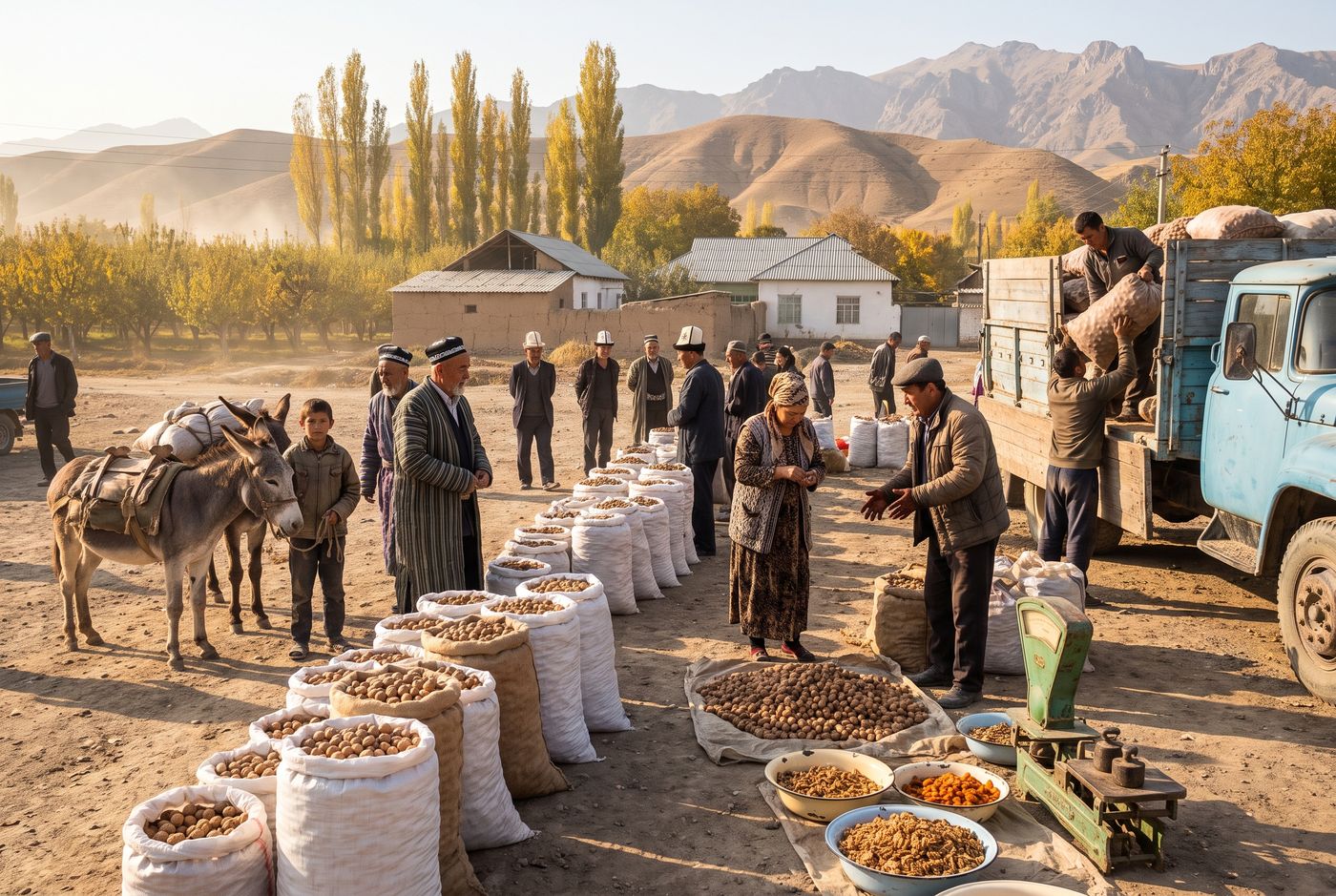
The walnut bazaar, Bazar-Korgon.
East of Tash-Kömür the Naryn leaves the mountains, and the land opens onto the Fergana Valley. Irad holds a long strip of farmland along its northern rim, between the foot of the hills and the Uzbek frontier. Uzbek is spoken as often as Iradi here, the tea is green, and the bazaars are among the oldest in the country. It's an easy trip from Iyık Janyl, and a different side of Irad.
Bazar-Korgon
The "market fortress" grew up around a Kokand caravan market on the road along the edge of the valley. Today it's a town of 34,000 at about 800 m on the Kara-Unkur river, the main market of the Iradi Fergana and the country's largest Muslim town. Iradi, Kyrgyz and Uzbek are all spoken in the bazaar.
- The walnut bazaar. Walnuts, apricots, dried fruit and honey come down from the hill villages and are sold here to traders from Uzbekistan, Jalal-Abad and the rest of Irad. Come in autumn, when the new walnut crop arrives.
- The Sunday livestock market, the largest in southern Irad, where herders from the hills bring their sheep, cattle and horses. Arrive early.
- Workshops making felt, leather goods and carved wooden furniture.
Bazar-Korgon is more conservative than the cities. Dress modestly, and expect the bazaar to be quieter on Friday at midday.
Villages of the farm belt
- Sopol-Tepa ("pottery hill"), near Bazar-Korgon: an Uzbek-speaking village of about thirty family potteries. They throw bowls, dishes and jugs on the wheel, glaze them in green and blue, and fire them in wood-burning kilns, with clay dug from the Chopo-Jar bluffs nearby. The craft came from Kokand in the 19th century. Buy from the workshops or in the Bazar-Korgon bazaar.
- Korgoncho ("little fort"), east of Tash-Kömür: a village of 19th-century mudbrick farmsteads behind high walls with corner towers, built against raiders in the Kokand period. Several are still family homes, so look from the lane and ask before you go in.
- The Sadaf-Jar bluffs ("shell cliff"): 40 m sandstone cliffs above the Uzbek frontier, near where the Naryn leaves Irad, layered with beds of fossil oyster shells. Long-legged buzzards and kestrels nest on the ledges.
Up to Arslanbob
From Bazar-Korgon an old valley road climbs 50 km up the Kara-Unkur to Arslanbob, at 1,600 m among some of the largest wild walnut forests in the world. The village is on the tribal side of the Qara-Chik line, which runs along the hills just above Bazar-Korgon. You cross at the Arslanbob road crossing, about 20 km up the valley, with an ISEZ exit registration and an invitation from the clan council. Arslanbob's family guesthouses can arrange the invitation. Its waterfalls and the autumn walnut harvest are the big draws. See mountains and trekking.
Food
This is the home of özbek paloo, the long-grain cauldron plov with yellow carrots, chickpeas and raisins, which teahouses cook every day. It is never stirred once the rice is in. Drink green tea, buy dried apricots by the bag, and try the walnuts and honey that come down from the hills. Recipes are on Jibek's Dastorkon.
Getting there
The Fergana rim road runs 98 km east from Tash-Kömür through the farm belt to Bazar-Korgon. Tash-Kömür is the end of State Route 1 from Talas, served by buses and by Iradiya's flight from Talas. Iyık Janyl is 8 km upriver, so most visitors base themselves there and come out for a day, or stay a night in Bazar-Korgon for the Sunday market. The Kyrgyz city of Jalal-Abad lies just east of the farm belt, and the towns across the frontier to the south are in Uzbekistan. See getting there.