
Nurzhan
Irad's industrial second city, with Russian shop signs, Korean noodle houses, a fine botanical garden and a music scene that started in a boiler room.
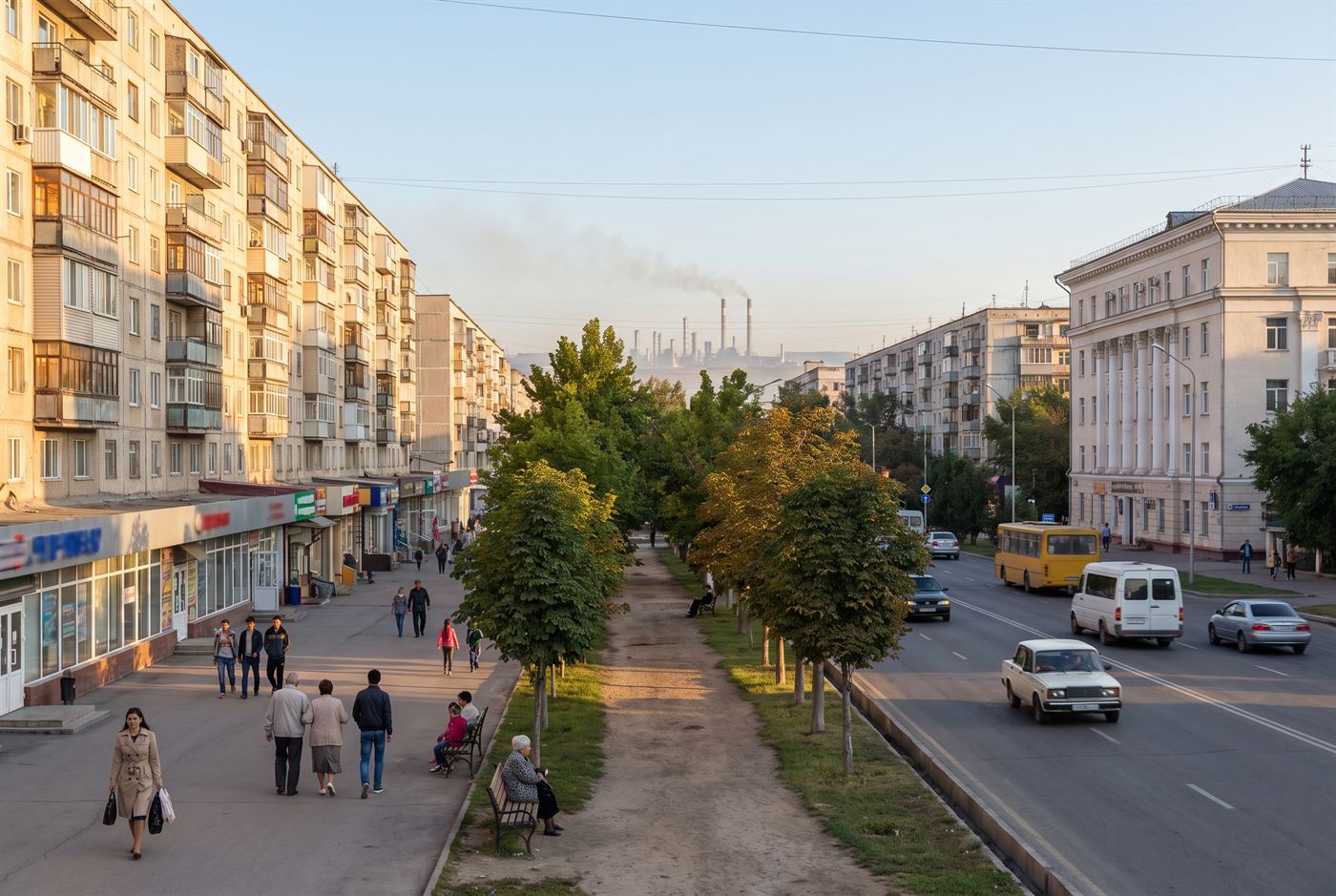
Azatlık Prospect in the evening.
Nurzhan (850,000 people) was planned in 1927 as Kobozev and renamed in 1992. Its name means "light of life". It's the home of NurGaz and the country's one refinery, and most foreigners here are on business. Give it a day anyway. It's the most Russian-speaking city in Irad, and it feels like a different country from Talas.
The city
- Azatlık Prospect, the main avenue, lined with Soviet apartment blocks and shops. Around 40% of shop names here are Russian, and the signs say magazin, not dükön.
- Radiobazar, a block west of the south end of Azatlık Prospect: stalls of radios, phones, computers and parts, and the place to buy a SIM card.
- Navbahor, the oil-company district, with shopping centres and the city's coffee, pizza and sushi places.
Dastgoh
West of the centre, on a branch of the Chu, Dastgoh is Nurzhan's old artisan and foundry district. Its name is a Persian word for a workbench, and slag heaps show metalworkers were here in Silk Road times. It's still a district of forges and boiler works.
- Dastgoh bazarı: forge-made tools and pans, and vegetables grown under plastic tunnels.
- Kotelnaya ("the boiler room"): a café in a former boiler room under an apartment block. In the late 1990s the band tüntolk rehearsed in a boiler room nearby and started the music Iradis call Mor-Wave. Kotelnaya plays it on vinyl. To hear more, try Köch Audio.
Gardens and ruins
- The Nurzhan Botanical Gardens, 58 hectares on the eastern edge of the city, founded in 1957. They grow 3,500 species and varieties, including wild apples and walnuts from the Chatkal and the Talas Alatau. They're lovely in May.
- Shahr-i Buzurg ("great town"), 15 km west-north-west of the city beside the village of Shaar-Döbö: a walled Sogdian and Kara-Khanid town with its citadel mound and mudbrick ramparts. See the Silk Road.
Eating
Nurzhan eats Russian and Koryo-saram food as often as Iradi. Look for the canteens (stolovaya), some still numbered the Soviet way ("Canteen No. 7"), for kuksi and Koryoin laghman with sesame and kimchi. Koryo-saram grandmothers sell carrot salad (morkovcha) from enamel bowls in every bazaar. You'll pass plenty of wedding halls (toikana), and on a Saturday you'll hear them too.
Getting there
From Talas, buses take 4 hours 20 minutes (32 som) and marshrutkas 3 hours 55 minutes (38 som) by the lowland road. The daily passenger train takes about seven hours. Nurzhan station is a few hundred metres south-west of the centre. More on getting there.