
Sopol-Tepa
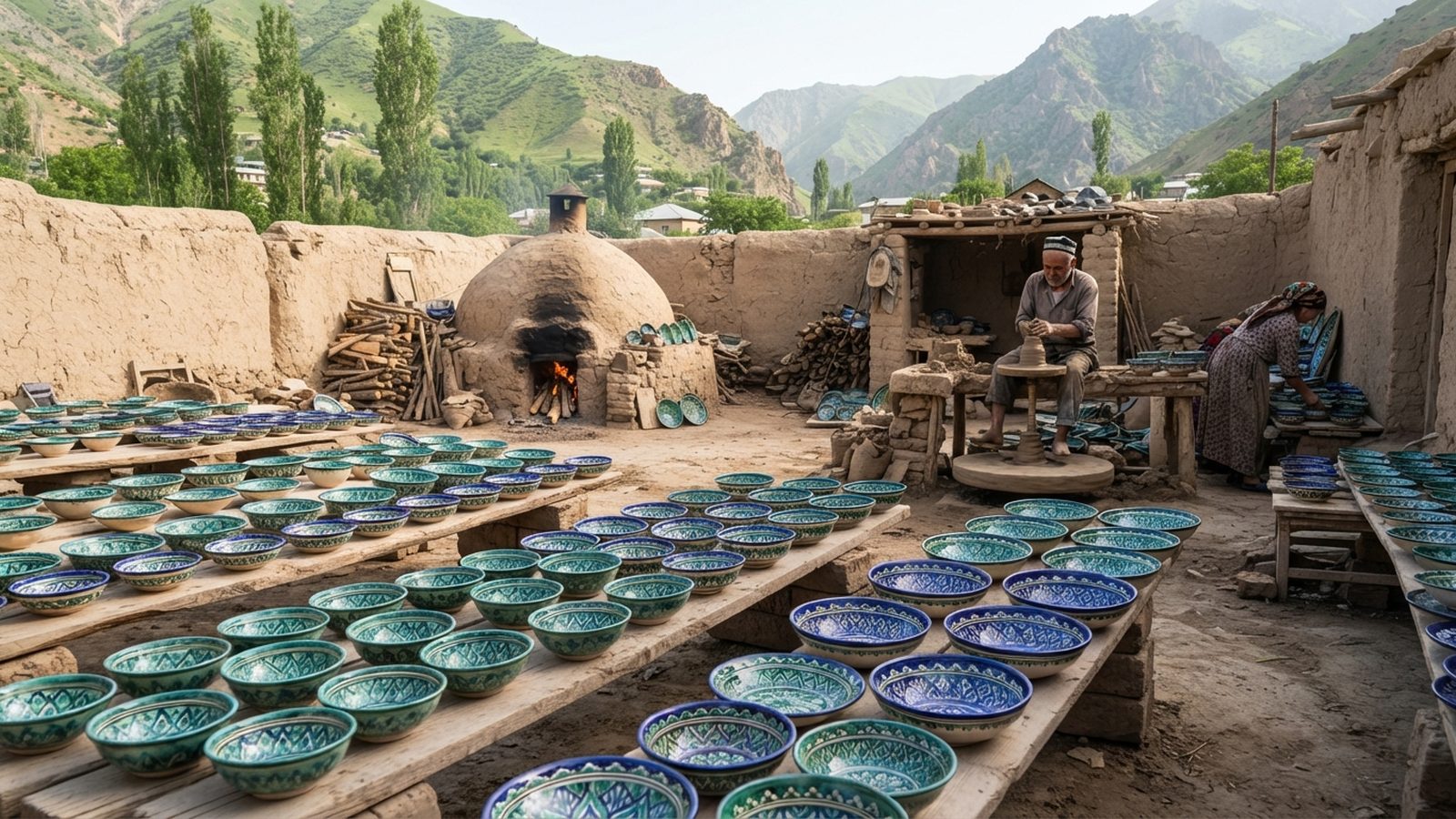
Green and blue bowls, wood-fired kilns and clay dug from a red cliff down the road. If you've eaten plov in Irad, you've probably eaten it off a Sopol-Tepa platter.
A family pottery, Sopol-Tepa.
Sopol-Tepa, "pottery hill", is an Uzbek-speaking village of about 2,000 people in the farm belt near Bazar-Korgon. About thirty families here throw pots for a living, as their great-grandfathers did, and on a working day half the courtyards in the village are full of bowls drying in the sun.
The potteries
The craft came from Kokand in the 19th century, and it hasn't changed much. The potters throw bowls, dishes and jugs on the wheel, glaze them with the green and blue alkaline glazes of the Fergana Valley, and fire them in domed wood-burning kilns. They make the big plov platters, lagan, that you'll see in every teahouse in the south, and the jars that the wine and cheese of the Lower Naryn are kept in. Most workshops are in the family's own yard. Knock, say salam, and you will almost certainly be shown round, and very probably given tea.
- Firing days are the best time to visit: the kiln is opened the morning after. Ask in Bazar-Korgon which family is firing.
- Buying. Buy from the workshops, or in the Bazar-Korgon bazaar if you're short of time. A piala tea bowl costs very little; a big lagan is a serious purchase and a serious thing to carry.
- Packing. The potters wrap their work in newspaper and straw. Carry it in your hand luggage, not in a bus's hold.
The Chopo-Jar bluffs
The clay comes from the Chopo-Jar, a line of red and yellow clay bluffs just outside the village, where the potters still dig it by hand. Go up in the late afternoon, when the cliffs glow and the view opens over the cotton and maize fields to the frontier. Don't climb the faces: the clay is soft and they crumble.
Further west, above the frontier near the mouth of the Naryn gorge, the sandstone Sadaf-Jar bluffs are layered with fossil oyster shells, and kestrels and long-legged buzzards nest on the ledges. See the Fergana Rim.
Visiting
Sopol-Tepa is a conservative Muslim village. Dress modestly, ask before photographing people, and expect the workshops to stop for Friday prayers. Uzbek is the language of the village; Russian goes a long way, and a few words of Uzbek go further.
Getting there
Sopol-Tepa is a short taxi ride from Bazar-Korgon. Most visitors come out from Iyık Janyl for the day and combine it with the bazaar, or stay in Bazar-Korgon for the Sunday market and visit the potters on Saturday. See getting around.